The ‘destination’ or the lost domain
Imagine a rural French landscape. A tapestry of rolling fields threaded with tree lined avenues and dirt tracks, golden and glinting under the midsummer sun – pathways to nowhere, or somewhere.
“This was the setting in which the most troubled and most precious days of my life were lived: an abode from which our adventuring’s flowed out, to flow back again like waves breaking on a lonely headland.” – Alain-Fournier, Le Grand Meaulnes (translation by Frank Davison, 1959)
Having recently finished Alain-Fournier’s, Le Grand Meaulnes, I was struck by the pull of adventure. I felt myself longing to join the young François and Augustin on their journey to that surreal scene, to that ‘lost domain’.
And I am not alone in this in desire. We are all, to some degree, innately curious beings – who find joy in a journey where the destination doesn’t matter or is yet to fully reveal itself.
Are we there yet? The known is now the norm.
In so much of our place-building and visitor strategies, we talk about the importance of “the destination” over the risk and reward of the casual encounter, the chance moment, the individual epiphany, the unknown.
With more and more big-ticket exhibitions this year alone – from Tracey Emin, Lucien Freud, Frida Kahlo, to Anish Kapoor. It is all about the known, the blockbuster, the collective cultural moment. The result, a day-out of art, artifacts, history and expression, now with a side of food, drink, or light entertainment. A set menu of sorts – but at a cost.
Don’t get me wrong, I am in no way advocating against such blockbusters – often spellbinding in their content, scale and curation. But it’s worth pausing a moment to question the impact of the known becoming the norm. Packaged, pre-sold, and setting a prior justification for visiting.
How then, might the museum offer both the known and the unknown. How might they get people through the doors for something that can’t be justified, that is unexpected and/or more personal? How might they connect with not only the collective, but also the individual? – Creating experiences for solo wanderings, for serendipity, for self-reflection – for enacting the lure of the lost domain…
Curiouser and Curiouser – the joy of individual discovery.
Most of us are driven by curiosity. We are intrinsically motivated by a need to explore, to see anew, to delve deeper into the world and our own psyche. “The desire to learn for its own sake appears to be a natural motive built into the central nervous system” as explained and evidenced by Csikszentmihalyi and Hermanson in their work, Intrinsic Motivation in Museums.
Social scientist, John H. Falk also explores visitor motivation in Identity and the Museum Visitor Experience. Though published two decades ago, it strikes me that Falk’s work is just as relevant today, as it was then. Perhaps even more so – in a world where speed, efficiency and the offer of apparent ‘certainty’ is on overdrive.
Falk’s research proposes five main visitor types – the Explorer, the Facilitator, the Hobbyist, the Experience Seeker, the Recharger. Of these five identities, I would argue that three of them – The Explorer, the Experience Seeker, and the Recharger – are attracted by discovery, by experiences that are often solo in their endeavour, and without a clear ‘destination’.
On the one hand, that’s because curiosity is a proven psychological need, and on the other, it’s because for these visitors, curiosity is a conscious choice, part of how they see themselves – how they enact their identity as “curious people”. The visit therefore becomes a form of self-validation, a self-directed choice, a site of quiet reflection – ultimately, individual.
It only makes sense then, that such places meet people as individuals, with complex identity-related needs. Museums need breadth and depth, the fast and the slow, the moments to lose oneself, as well as the big cultural moments with others.
And as the collective experience rises with the destination blockbuster – it’s important to remember individual needs and different visitor typologies. To create for a chance encounter, for the discovery of something new, for personal and quiet epiphanies, for solo meanderings.
The ‘lost domain’ as symbol for the future
Museums and visitor sites are perfectly placed to do this – they, by nature, are known as centres for the curious and reflective. Interestingly and by no coincidence, museums and encyclopaedias appeared at about the same time during the Enlightenment (as observed by the French scholar, Rene Huyge) – to satisfy a need for self-learning and discovery.
And so, in a world where the blockbuster, the ‘known’, the destination, are close at hand – François and Augustin’s coming-of-age adventure to the ‘lost domain’, may be a helpful counterpoint.
The ‘lost domain’, signifying intrigue, introspection, self-reflection and personal journeying, is perhaps an interesting reminder for our visitor sites of the future, and for our understanding of human behaviour.
Of the need to balance the known with the unknown, the lost with the found, the destination with the domain.
Written by Esther Mason
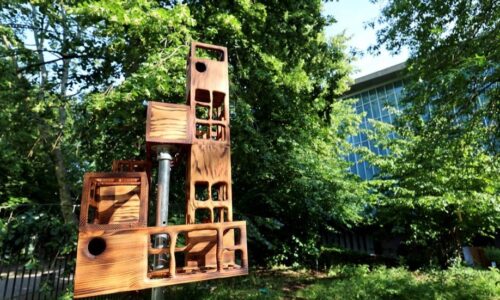
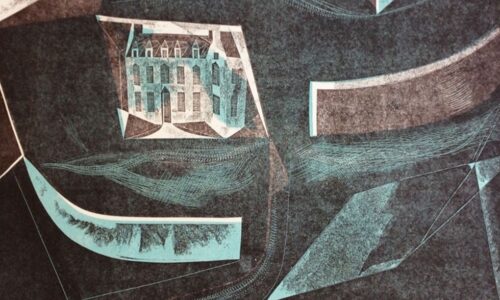
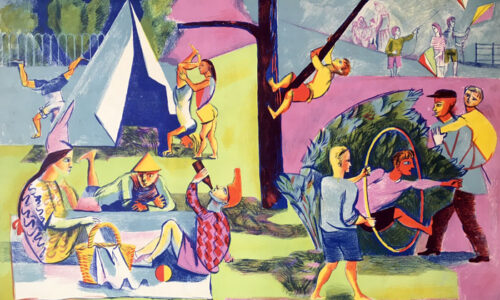
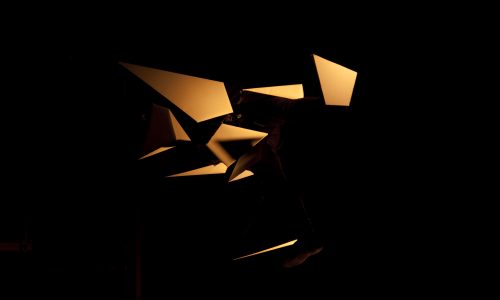
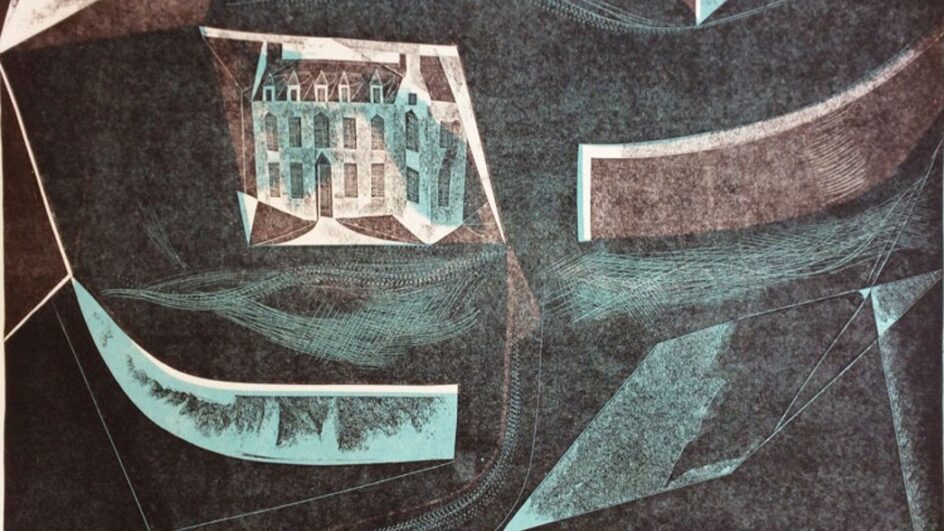
Photo: Lost Domain by Charles Shearer
April 2026