Imagination: in the ring
In conversation with our clients
Imagination is potent.
It creates movements, belief and understanding for all of us – whatever we do.
Welcome to Highwire – an occasional series of essays and films where we put ideas in the ring with clients, artists, designers, writers, commentators – friends of Circus.
In this film, we explore Imagination.
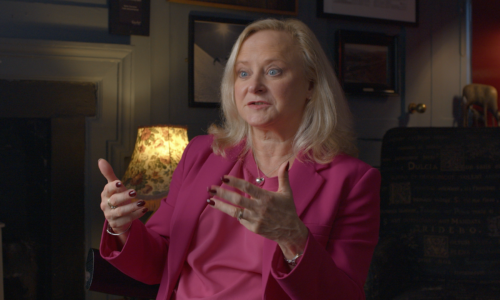
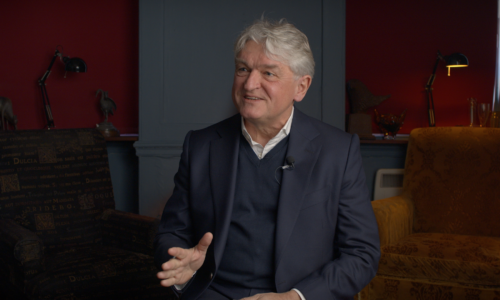
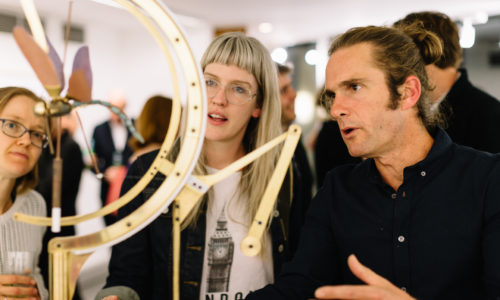
Scientific publishing, university education, the law, spectacles and pottery. Our guests reflect on their definition of imagination and why it is of importance commercially and culturally to their organisations.
For Circus, imagination has always been at the centre of the ring. Without the ability to imagine new possibilities, new ways of doing things, we simply cannot do our job. We cannot create strategic scenarios or offer best advice.
For us and our clients, imagination is about consciously visualising alternative futures and being bold and active. It creates commercial distinction and cultural advantage, inventing and reinventing brands, products and experiences. It is charismatic for customers and colleagues.
Yet imagination is sometimes downgraded in boardrooms. Leaders have been trained to prioritise delivery, precision and control. Such rigour is essential for business success – albeit with the diagnostic now powered and delivered by our AI provider of choice.
Without such rigour, imagination drifts.
But without imagination, such analysis merely maintains the present — or, at worst, rehearses yesterday. Without imagination, we are children with our fingers in the flame. We are less expert at both inventing and understanding scenarios and consequences.
I have long been intrigued by our ability to imagine something as yet unproven. Can we train ourselves to be more imaginative? Why is it that some of us find it easier than others? Why is it that some corporate cultures view imagination as a quaint craft hobby, whilst others laud it as the ultimate truth?
Albert Read in his excellent book, The Imagination Muscle defines it as a faculty of the mind to be nurtured and trained. I agree with this. There is great writing across academic disciplines from neurology – with the four types of imagination – to philosophy. I enjoy The Junkyard and am looking forward to the Oxford Handbook of Philosophy of Imagination and Creativity.
In some rooms, imagination is a proxy, or a precursor, for creative execution. The word creative suggests you are an artist or a maker. In this context, creative is often portrayed as a craft, or vocation — one that is now existentially at threat due to AI. Terrifying for all of us, whatever our day job.
But we would go further.
We would argue that imagination is essential in every facet of life – business, science, infrastructure, education, culture; every decision and action that can contribute to societal cohesion and harmony.
My own thesis is that we should consider imagination as an asset or currency. It is a faculty that should be trained and nurtured, and that this must start in schools with STEAM, not just STEM, and should continue through our lives.
For Circus, our imagination is inspired by the metaphor of circus itself. Our thinking is sharpened through a broad exploration of culture and commerce – highbrow and lowbrow. We visit, we write, we debate, we participate.
For half our existence, we had a gallery. We are curious. This is the imaginative performance which underpins our own strategic practice.
For our clients in this film, imagination is defined in different ways – as breakthrough, as curiosity, as adventure, as experimentation, as desire and distinction.
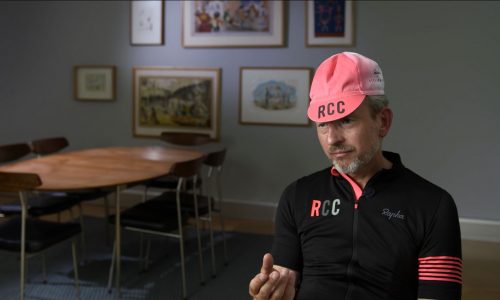
“The only way we’re going to survive, prosper and grow is through imagination.” – Tom Broughton, CEO, Founder, Cubitts
This is the first of our Highwire films with this group of guests. Further films will explore Discernment – the sibling to imagination, together with explorations of the role of Purpose within business more broadly.
We would like to thank our clients for participating, and sharing their ideas in the circus ring. Thank you to Tom Broughton for letting us film in his exciting new space at Cubitts HQ and to the Union Club – a place which lifts the spirits and always jumpstarts our imagination.
Written by Dilys Maltby
March 2026