More than Human Design
Urban living – so often imagined as human-centric concrete jungles. A world apart from nature. A stark contrast to the peace one feels in expansive greenery and under big blue skies.
But does it have to be?
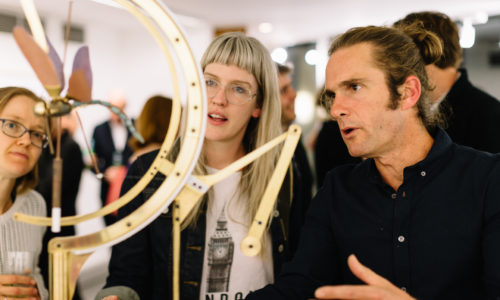
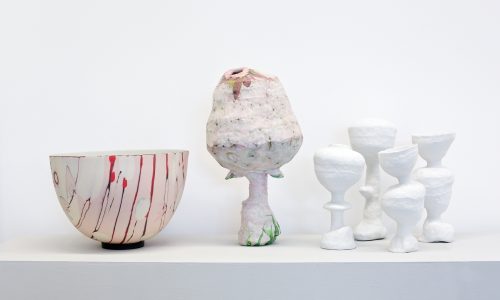
These are the sorts of questions two shows at this year’s London Festival of Architecture are exploring: ‘Dwellings, Rehomed’ at the Design Museum, and ‘Small Scale, Big Ideas’ at London’s Building Centre. Between them, they make the case that the natural world can be as much the protagonist in our cities, as the people that rush about them.
They argue that for human activity and wellbeing to truly flourish, we must go beyond human need alone – to design spaces for the species and systems – the rest of the living world – that’s always with us. Not as fixture or finish, or as regulatory tick box, but as embedded into the very fabric of urban life, of civic infrastructure.
Starting with birdsong – ‘Dwellings, Rehomed’
Since losing an argument with my brother, age 11, over what’s cooler – birds or sharks – I have always been stubbornly interested in the lives of our feathered friends.
Which is why I was so keen to visit ‘Dwellings, rehomed’.
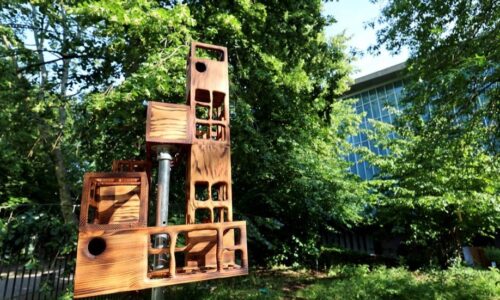
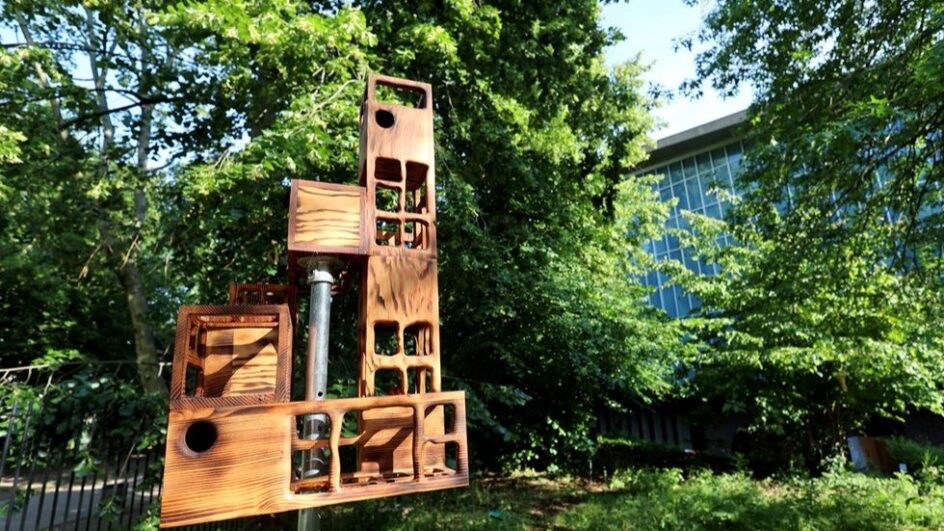
Hanging in the trees of the Design Museum Garden are a selection of bird houses designed by some of London’s most innovative designers. Providing both sanctuary for the robins, the warblers and the rest, in a busy urban jungle, as well as moments of quiet reflection – a chance to ponder on the interdependencies between humans and nature. Asking questions of how we want to live.
These reflections and questions are all part of a growing movement toward ‘more than human design’ – the practice by designers, to embrace the idea that human activities will only last and thrive, alongside other species and systems.
Not nature as backdrop. Not nature as planning requirement. Nature as co-inhabitant, as fellow, as friend.
Continually asking, who is the city for? And how we can live and flourish by focusing not only on human needs, but those of the living world around us?
Nature as civic engineering – ‘Small Scale, Big Ideas’
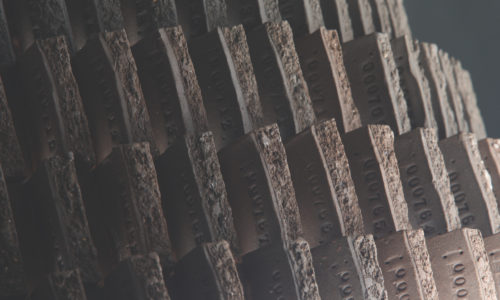
In recent years, there’s been much chatter about so called, ‘biophilic design’. But far less noise about the usefulness of natural materials in structural work. Many times, nature is used as decorative add-on, rather than foundational cornerstone.
At the exhibition, ‘Small Scale, Big Ideas’, I found many architectural practices exploring the same question. Exploring how we can work with the natural world beyond feature and finish.
Whether that’s bird houses – worlds in miniature humming beside our own. Or the use of timber in structural housing design – known to provide psychological and physiological benefits. Or urban planning that champions convivial neighbourhoods where every home opens onto tree lined avenue and space is given over to gardens.
Urban planning design can be ‘more than human’, and in so doing bring much, much more to the human experience.
Design as verb, not noun
Explorations such as these are in fact not wholly new – but crucial evolutions of the questions that urban planners, designers and theorists have been grappling with for years.
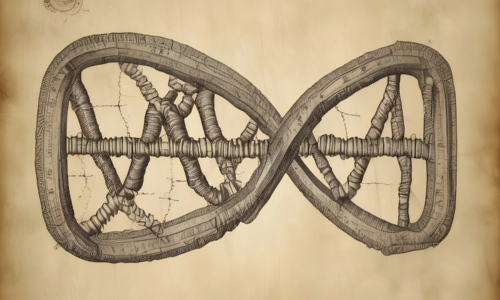
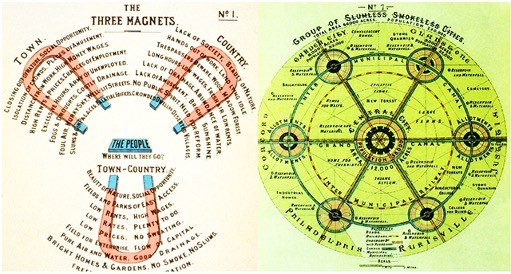
In as early as the 1902, Ebenezer Howard, an urban planner, set in motion the Garden City Movement. Taking the assumption that human beings are part of nature and not separate from it, Ebenezer created a plan to meet town and country – connecting social opportunity with the beauty of nature, freedom with cooperation. Envisioning the Garden City as a third magnet, Ebenezer believed this plan would attract residents and small businesses from both the too-crowded city and the too-isolated countryside, whilst improving the wellbeing of all things.
Ebenezer first brought to life the Garden City vision in Letchworth. A philosophic success, the ideas spread far and wide. And yet – under pressure from wealthy investors – Ebenezer had to make concessions, resulting in homes that didn’t meet his affordable housing mission.
A case of utopian design almost fully realised… and a tale which demonstrates that, where nature meets urban, where wellbeing meets progress, where sanctuary meets social possibility – this needs more than philosophy and vision alone.
Which is why it’s important to remember that ‘design’ is more a verb than a noun. Design is both the inception and realisation of an idea, an active participant, a doing and moving force. As one of the greatest designers of the 20th century, Enzo Mari once said: “Design is not design unless it communicates knowledge”.
And that, I wonder, could be the making of the ‘more than human design’ concept, or the neo-Garden City. The natural world cannot be just an aesthetic add on, a regulatory tick-box. Ebenezer knew this. The designers of this year’s LFA know it too.
Urban design that meets nature and city, must be useful, purposeful, foundational. And it must bring sanctuary and possibility to not only the people it houses, but the living species and systems that are always with us.
Written by Esther Mason
June 2026
Photo 1: Birdhouse by Jesse Crabtree Butterfield, Dwellings, Rehomed display, Design Museum garden
Photo 2: The Three Magnets (Ebenezer Howard, To-morrow: A Peaceful Path to Real Reform)