The Brontës and big tech
Here’s a revelation for you.
Emily Brontë, sitting at her writing desk in Haworth, watching the mist move and settle on the moors below her window, as scenes of romance, melancholy, fantasy passed over her mind – she reached for paper and ink.
Oh wait. No.
Bronte reached for her laptop. Click clack. Opened Chat GPT. Click clack. “My love for Heathcliff resembles the eternal rocks beneath”. Click clack.
Who’d of thought? That the Brontes had already discovered one of the biggest technological advances of the 21st century?
Not Silicon Valley, that’s for sure.
An unfair trial
But let me explain how we got here.
This week, I experienced my first accusation of using AI to write my articles. Their exact words?
“I have to admit; there is an air of an LLM’s hand in this.”
Ouch. I never use AI to help write my articles, or my poetry. But plead not guilty and somehow, I feel even more behind bars.
Immediately, I copy the article in question into an AI detector. The verdict comes back. 80% suspected AI use.
No, no, no. This can’t be right. Trying to build my case, I paste Emily Brontë’s poem, ‘The Bluebell’, first composed in 1838, into the same detector. Again, the verdict comes back – a hammer blow – 70% AI use.
Remarkable.
I try a number of other AI detectors – each time, the same.
The meaning of value
I’m well aware that these conversations aren’t new. The AI controversy over Mia Ballard’s novel, ‘Shy Girl’, for example, was pulled from shelves by Hachette only last month. And ethical conundrums – over whether using AI in writing is OK, if only we own up to it – are everywhere.
But to be confronted so directly and without a smidge of proof, makes for a demoralising reality.
It’s understandable that AI would cause us all to speculate more over what’s genuine and what’s not, but to become the default accusation behind any ‘good’ piece of writing? I didn’t think we’d go that far, this fast.
All this though, does raise interesting questions over value – and what a ‘valuable’ piece of writing will look like in the future. Today, despite being years into the AI boom, value is still often attributed to the amount of effort taken to get to a desired output. But given AI’s capacity to cut corners, to reduce time, energy, effort – means our definition of value will likely need to shift.
And this does leave room for hope.
Writing – as communication of a conscious, fallible human
Value in writing goes far and beyond just the effort or difficulty that went into it, or how grammatically correct it might be. Writing is one of the most immediate ways to express how we’ve lived and who we are – our morals, judgement, desires.
In this future AI-dominated world, the value of writing may increasingly be attributed to opinion, investigation, imagination – ultimately, the point of view of a conscious, fallible human.
‘Value’ might be more and more obtained through the energy of conviction, and a bravery to put ourselves out there – through words.
The lasting magic of metaphor
Finally, much of the hope I hold lives in metaphor.
Rooted in the Greek word ‘transfer’, metaphor has long been a device to move meaning, to say something new, to tap into shared experiences, to amplify feelings and visions, and to push the literal meanings of words to new heights and new homes.
To do this well, one has to be a conscious participant within the world, they have to notice things, they have to understand what others notice too – it’s an act that’s irreplaceably and profoundly human.
Because as Susan Sontag said, “a writer is someone who pays attention to the world”.
Writing is not apart from living. Writing is being conscious of living and having something to say about it.
And that’s where true value lies.
So I’d like to end on a metaphor from one of writings chief sorcerers, the late and great Hilary Mantel – who even in speaking of writing, is able to write her way to something entirely profound and entirely, well, human.
“The word ‘however’ is like an imp coiled beneath your chair. It induces ink to form words you have not yet seen, and lines to march across the page and overshoot the margin. There are no endings. If you think so, you are deceived as to their nature. They are all beginnings. Here is one…”
Written by Esther Mason
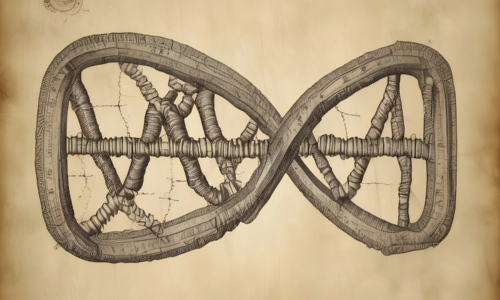
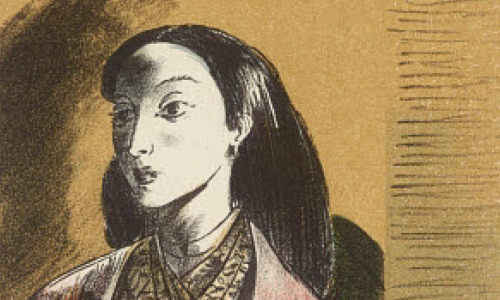
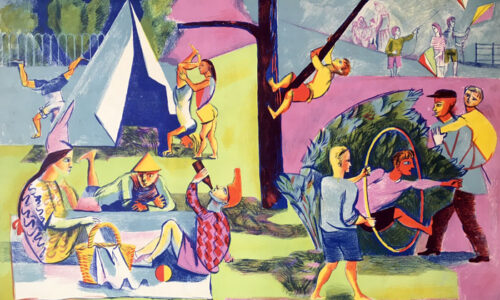
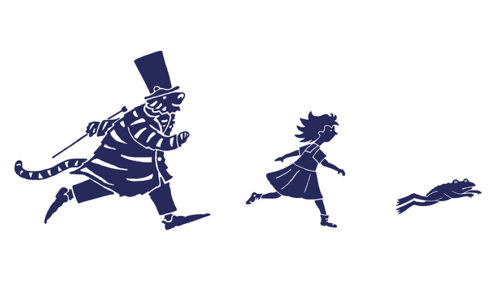
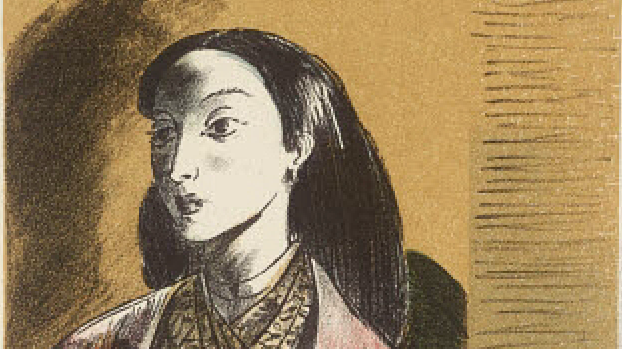
Photo: Barnett Freedman, Brontë illustrations
May 2026